Updates

We seek to keep you literally "updated" on movement in terms of truth and justice in the Middle East in general with a particular eye on Palestine. The links below will take you to various articles and websites that offer the perspective of leaders in the religious, NGO, and human rights communities. Additionally, Al-Bushra, ever vigilant, provides links to regular reporting as well as opinion pieces by journalists. The dates given here indicate when the link was posted; the most recent posting is at the top. Check the article itself for the date the information was released by the source.

Tuesday, December 2, 2014

Beit Jala celebrates the beginning of Advent and the foundation of its scouts


BEIT JALA – Last Sunday, November 30, 2014, the parish of the Annunciation in Beit Jala opened its celebrations for the beginning of Advent, with a Solemn Mass celebrated by Father Imad Twal, General Administrator of the Latin Patriarchate in Jerusalem, who later attended the opening of the parish Christmas market.
 

The Mass was celebrated in the presence of a large number of the faithful, and concelebrated by Father Simon Hijazeen, Vicar of the parish, and Father Faysal Hijazeen, Parish Priest. Also participating were the leaders of the various scout groups of the parish, who are celebrating 65 years of their foundation. Numerous representatives of civil authorities in the governorates of Bethlehem and Beit Jala were present at the celebration, including the Mayor, Mr. Naël Salman, himself a member of the parish.

In his homily, Father Imad recalled how the Catholic faithful in this First Mass of Advent have embarked upon the Holy Season of Advent in preparation for the Birth of our Savior Jesus Christ. In the Catholic Church, this Season is not only an external preparation for Christmas, but also an interior one, in spirit, for man needs the joy of Christmas in his life. This interior journey is a pilgrimage. A pilgrimage in the heart and life of each person and every family. A pilgrimage that knows its Day of great popularity, but also its less beautiful and more difficult days. The Birth of Christ must occur in our hearts, and in the quality of our relationships, which, in turn, are real sources of joy.

After Mass, all were escorted to the main parish hall for the opening of the Christmas market, called “The joy of Christmas”. The market is composed of and organized by the different parish groups, without exception. There is the opportunity for beautiful photos with family and with Santa and the nursery. A grand selection of local savory items and pastries are available for purchase, as well as Christmas decorations, children’s games, books, and other items of interest to every Christian family. The profits from this Christmas market will be used to bring a smile to a few poor families of the parish. The Market is open until Wednesday, December 3, from 3:00pm-9:00pm.

Enjoy!
Wassim Kasabri

Source: http://en.lpj.org/2014/12/03/beit-jala-celebrates-the-beginning-of-advent-and-the-foundation-of-its-scouts/

“Christmas tree of solidarity” lit up at the centre of displaced Iraqis in Naour


 Amman - Abouna

Abouna.org, Dec. 1, 2014 - With Christmas celebrations approaching, Latin Church in Naour celebrated on Sunday November 30, lighting up “Christmas tree of solidarity” with the displaced Iraqis from Mosul at the centre abutting the church that houses them.

Marking advent time and amid the prevalent atmosphere of hymns and prayers, the Christmas tree was lit up at the centre, which is enlivened by the displaced Iraqi families, in preparation for Christmas celebrations.

At the Sunday evening Mass that preceded the lighting up celebration, parish priest Fr. Rif’at Bader said: “We have named this tree ‘the solidarity tree’ because this word reflects purity and humanitarian values that transcend ethnic and religious differences. This made the Jordanian King, government and people rush to rescue the suffering brethren from neighboring countries, especially Syria and Iraq.”

He added: “The Iraqi groups that arrived in Jordan recently fleeing religious injustice were warmly welcomed by our dear Kingdom according to the directives of His Majesty the King. The doors were wide open because the approach of the Kingdom and the Hashemites is to respect the religious components and pluralism that have always brightened the Middle East, which is the origin of civilizations and religions whose message is to unite rather than separate.”

Fr. Rif’at Bader continued: “We express our pride and pleasure as we celebrate Christmas this year with our Iraqi brethren while trying-- in spite of the pain of displacement—to map out a smile on the faces of children who have the right to rejoice in the Christmas atmosphere like other children of the world.”

He said: “This would have not happened, had it not been for Jordan's overture policy and the directives of His Majesty the King, for the King is not only the protector of the holy sites in Jerusalem but rather he is the first defender of Christian Arab identity, of the grand pluralism, as well as of the sincere and meaningful dialogue between the followers of all religions.

Later, Fr. Bader read out the joint statement, which was signed on Sunday, November 30, in Istanbul by Pope Francis and the Ecumenical Patriarch Bartholomew and incorporated a message of encouragement to the displaced Christians. It says: “We cannot resign ourselves to a Middle East without Christians, who have professed the name of Jesus there for two thousand years. Many of our brothers and sisters are being persecuted and have been forced violently from their homes. It even seems that the value of human life has been lost, that the human person no longer matters and may be sacrificed to other interests. And, tragically, all this is met by the indifference of many. As Saint Paul reminds us, “If one member suffers, all suffer together; if one member is honored, all rejoice together” (1 Cor 12:26).”

Amid the distinguished joy which the displaced Iraqis experience this year, away from their country and their churches, many of them expressed their joy and gratitude to the Kingdom of Jordan, with its Muslims and Christians, and thanked all charities, especially Caritas Jordan, the Pontifical Mission in Jordan, and the individuals who rush these days to present gifts to the displaced children and families. Many of them said: "Had it not been for Jordan, the King of Jordan, and the people of Jordan, we would have not celebrated Christmas this year."

Source: http://en.abouna.org/en/holylands/%E2%80%9Cchristmas-tree-solidarity%E2%80%9D-lit-centre-displaced-iraqis-naour

Allocution of Patriarch Bartholomew on Saturday evening

Pope Francis receives a fraternal kiss from Patriarch Bartholomew - REUTERS

Vatican Radio, Nov. 29, 2014 -  Pope Francis and Patriarch Bartholomew of Constantinople jointly presided over an ecumenical prayer service on Saturday evening in the church of St. George, within the Ecumenical Patriarchate. Below, please find the full text of the allocution His All Holiness, Bartholomew, prepared for the occasion.

*********************************************
Your Holiness,

In offering glory to the all-good God in Trinity, we welcome You and Your honorable entourage to this sacred place, the hierarchal See of the historical and martyric Church charged by divine providence with a profoundly responsible ministry as being the First-Throne among the local most holy Orthodox Churches. We welcome You with joy, honor and gratitude because You have deemed it proper to direct Your steps from the Old Rome to the New Rome, symbolically bridging West and East through this movement, while translating the love of the Chief Apostle to his brother, the First-Called Apostle.

Your advent here, being the first since the recent election of Your Holiness to the throne that “presides in love,” constitutes a continuation of similar visits by Your eminent predecessors Paul VI, John Paul II and Benedict XVI, but also bears witness to Your own will and that of the most holy Church of Rome to maintain the fraternal and stable advance with the Orthodox Church for the restoration of full communion between our Churches. Therefore, it is with great satisfaction and appreciation that we greet the arrival here of Your Holiness as an historical event filled with favorable signs for the future. This sacred space, where in the midst of diverse historical challenges Ecumenical Patriarchs have for centuries celebrated and celebrate the holy Mystery of the Divine Eucharist, constitutes a successor to other illustrious places of worship in this City, which have been brightened by renowned ecclesiastical personalities already adorning the choir of great Fathers of the universal Church. Such luminaries include our predecessors Saints Gregory the Theologian and John Chrysostom, whose sacred relics now lie in this holy church, thanks to their gracious return to the Ecumenical Patriarchate by the Church of Rome; their relics are alongside those of Basil the Great and Euphemia the Great Martyr, who validated the Tome of the Fourth Ecumenical Council, as well as other saints of the Church. This year marks the tenth anniversary since the blessed return of the relics of St. Gregory and St. John; wherefore, we express to Your Holiness our fervent thanks for this fraternal gesture on behalf of Your Church to our Patriarchate. May these holy Fathers, on whose teaching our common faith of the first millennium was founded, intercede for us to the Lord so that we may rediscover the full union of our Churches, thereby fulfilling His divine will in crucial times for humanity and the world. For, according to St. John Chrysostom: “This is what ultimately holds the faithful together and upholds love; indeed, this is precisely why Christ said that we should be one.” (Homily on Philippians 4.3 PG62.208)

We express once again the joy and gratitude of the most holy Church of Constantinople and of ourselves on this formal and fraternal visit of Your Holiness, and we wish You and Your honorable entourage an altogether blessed sojourn among us so that we may further increase our fraternal relations for the glory of His name.

“Thanks be to God for His inexpressible gift.” (2 Cor. 9.15) Welcome, beloved brother in the Lord!

Source: http://en.radiovaticana.va/news/2014/11/29/allocution_of_patriarch_bartholomew_on_saturday_evening/1112997

Cardinal Tauran: Muslims, Christians must be credible believers

Cardinal Jean-Louis Tauran, president of the Pontifical Council for Interreligious Dialogue


Vatican Radio, Nov. 25, 2014 -  The head of the Pontifical Council for Interreligious Dialogue, Cardinal Jean-Louis Tauran, told Muslim leaders in Iran on Tuesday that all minority groups should be allowed to speak openly without fear of “any negative reactions”. He said Muslims and Christians should be credible partners in dialogue, while religious text books must “present religions and their followers in an objective and respectful manner.”

The cardinal’s words came during the 9th Colloquium between Iran’s Center for Interreligious Dialogue (CID) of the Islamic Culture and Relations Organization (ICRO) and The Pontifical Council for Interreligious Dialogue (PCID) which is taking place in Teheran on November 25th and 26th. The theme of the meeting is “Christians and Muslims in Constructive Dialogue for the Good of Society.”

Please find below the full text of Cardinal Tauran’s address:

Your Excellency Dr Abuzar Ibrahimi Turkaman,
Your Excellencies,
Ladies and Gentlemen,
Dear Friends,

First and foremost, I raise my heart in thanksgiving to God, the Almighty and All-loving, in Whom we, Christians and Muslims, believe with similarities and differences that make our respective religious traditions inseparable parts of the great family of the Abrahamic monotheism.

In my name and also in that of my delegation, I wish to thank Dr Ali Muhammad Helmi, the Director General of the Center for Interreligious Dialogue, and his staff for all what they have done to make this important meeting possible.

From the Pontifical Council for Interreligious Dialogue, its Secretary, Fr. Miguel Ayuso, was here in Iran for a preparatory meeting of the Colloquium, while Mons. Khaled Akasheh, the Bureau Chief for Islam, has been coordinating the event.

The contribution of speakers, participants, the Apostolic Nunciature in Iran, and of the Chaldean, Armenian and Latin Churches, has been of great importance for the preparation and the carrying out of this event.

This is our ninth colloquium. However, some of us had occasions to meet during similar initiatives in other countries. These meetings, we can say, have generated confidence, mutual esteem and collaboration. It is hoped that the III Christian – Muslim Summit that will take place in Rome next December, to which some of the participants of this Colloquium, will only enhance these aspects necessary for peace-building.

As we are all aware of, mutual knowledge and cooperation, especially in times of crisis is of great importance. The very fact that religious leaders and scholars from different religions traditions are meeting together is an eloquent message to respective religions.

However, once we are back to our respective communities, the questions normally put to us are: What are the advantage of your dialogue for us, Muslims and Christians, at the grass root level? What kind of changes can we expect in our daily life? These questions become more pertinent for religious communities particularly for those that are small in number in a society that has a strong majority belonging to another religion. This is true in the case of Muslims in Italy, of Christians in Iran, and both for Muslims and Christians in India.

An easy ‘temptation’ in this context can be that of speaking for those communities saying, well, they are fine; they enjoy many privileges, therefore, they should not complain of anything. It would, however, be more opportune to give these little communities the possibility of speaking about their situation openly, without fearing any negative reactions either from the political authorities or from their neighbours. Self-criticism and constructive criticism by others are very useful. Through them either we open our eyes to the reality or are helped to open to the same.

This leads me to an important aspect of being believers and also of being believers in dialogue. It is the question of credibility. Am I credible as a Christian or as a Muslim? And to be credible, I have to ask myself whether I am consistent. Are my deeds in compliance with my words or are they contradictory to one another? This is obviously true also for our dialogue: Is it credible? Is it useful?

We are all aware of the necessity of dialogue of specialists, as ours. We should also be aware of our responsibility of bringing the finding and fruits of our meetings and deliberation to all spaces where Muslims, Christians and other believers, and also persons of good will who do not profess any religion live, work, study together. Education, especially through text books, has the moral obligation to present religions and their followers in an objective and respectful manner. Also, religious discourses, in all their spaces and forms, have the obligation of speaking about others as brothers and sisters. The words of Imam Ali "Know that people are of two types: they are either your brothers in religion or your equals in creation." (Nahjul Balagha, Sermon #53), are of great significance. We can add a third category: brotherhood in Abrahamic monotheism, that includes the Jews as well. This reminds us of what Saint John Paul II said to the Christians of Istanbul in respect to Muslims: let us remember the spiritual bonds that unite us. Promoting these kinds of relations is one of the major reasons for the existence of the Commission for Religious Relations with Muslims at the Pontifical Council for Interreligious Dialogue. Obviously, while remaining brothers and sisters in humanity and in the Abrahamic monotheism, we constitute two distinct religions, that are called to thank God for what we have in common, while knowing and respecting our differences.

“Christians and Muslims in Constructive Dialogue for the Good of Society” is the theme of our Colloquium. “Construction” normally refers to the building of a house on strong foundations, layer by layer. We are continuing to construct on what many other Muslims and Christians have already done or are doing so. We need to be sure that we are doing good work, on solid foundations, to be sure of the hoped results for our present and our future.

While speaking of the good of the society, we refer to all its components, without excluding any one. In this, we imitate God Who, according to Jesus’ words, shines his sun on the good and on the evil, and sends his rain on the good and on the evil alike. Let us therefore prove by our deeds the usefulness of our deliberations and discussions.

The sub-themes that have been agreed upon and that will be presented during our meeting are interesting and important at the same time: Spirituality, religious values as a response to extremism and violence and the role of media in promoting a culture of dialogue.

When these sub-themes were agreed upon during the preparatory meeting, no one thought that the one regarding extremism and violence would become so dramatically phenomenal. We cannot remain silent or indifferent to the extreme, inhuman and multi-form violence of which Christians and Yezidis have been subjected. Many of them, as we know, have preferred death to renouncing their faith. They are true martyrs. The sacrifice of those who were driven out of their homes, often carrying but only the dress they were wearing, should not be forgotten. Nothing can justify these heinous acts. Invoking religion to justify these crimes would be a crime against religion itself as well.

Dear brothers and sisters, Muslims and Christians, and, in fact, all of humanity, need abundant and concrete fruits of our dialogue. This meeting is like a star in a dark night. Let us pray and work, in particular through our dialogue, for a world of justice, peace, security, fraternity and prosperity.

Source: http://en.radiovaticana.va/news/2014/11/25/card_tauran_muslims,_christians_must_be_credible_believers/1112325

Turkey's Catholics thank Pope for visit

Pope arriving for Holy Mass at Istanbul's Holy Spirit Church on November 29, 2014. - AFP

Vatican, Dec. 2, 2014 -  Turkey’s tiny Catholic community has thanked Pope Francis for showing them the path to ‎peace, during his Nov. 28-30 visit to the overwhelming Muslim nation.  “Thank you Pope Francis, for ‎the gift of your visit to Turkey where you were able to meet not only a hardworking and generous ‎people but also a living Christian community,” wrote Dr. Rinaldo Marmara, the spokesman for ‎Turkey’s Catholic Bishops’ Conference, in a statement on Monday.   He noted that despite being a ‎minority, the Catholic community knows how to draw courage, strength and hope to face the daily ‎difficulties for Christian witnessing.    Turkey’s Catholics thanked the Holy Father for showing them the ‎path to dialogue with other Christian communities and their Muslim brothers.  They also expressed their ‎gratitude for reminding them that true peace cannot but be based on respect for the fundamental rights ‎and duties  linked to the dignity of man.    Turkey’s Catholic Church committed itself to engage in ‎inter-religious and inter-cultural dialogue to promote solidarity among believers for a healthy social ‎cohesion.
‎

During his 3-day visit to Turkey, Pope Francis celebrated one public Mass for the country's Catholics at Istanbul's Church of the Holy Spirit on Nov. 29.  The main purpose of this visit was to celebrate the Nov. 30 feast of St. Andrew the Apostle, at the Ecumenical Patriarchate of Constantinople in Istanbul.  The Apostle is regarded as the founder and patron of the Patriarchate.

Source: http://en.radiovaticana.va/news/2014/12/01/turkey%E2%80%99s_catholics_thank_pope_for_visit%E2%80%8E/1113182

Year of Consecrated Life inaugurated in Bethlehem

BETHLEHEM – On Sunday, November 30, 2014, the Year of Consecrated Life was inaugurated in Bethlehem – an initiative announced by Pope Francis at a meeting with members of the Union of Superiors General (USG) in Rome on November 29, 2013. The celebration was presided over by Father Pierbattista Pizzaballa, Custos of the Holy Land, in the presence of the Patriarchal Vicar in Jerusalem, Bishop William Shomali, representing the Assembly of Catholic Ordinaries of the Holy Land.

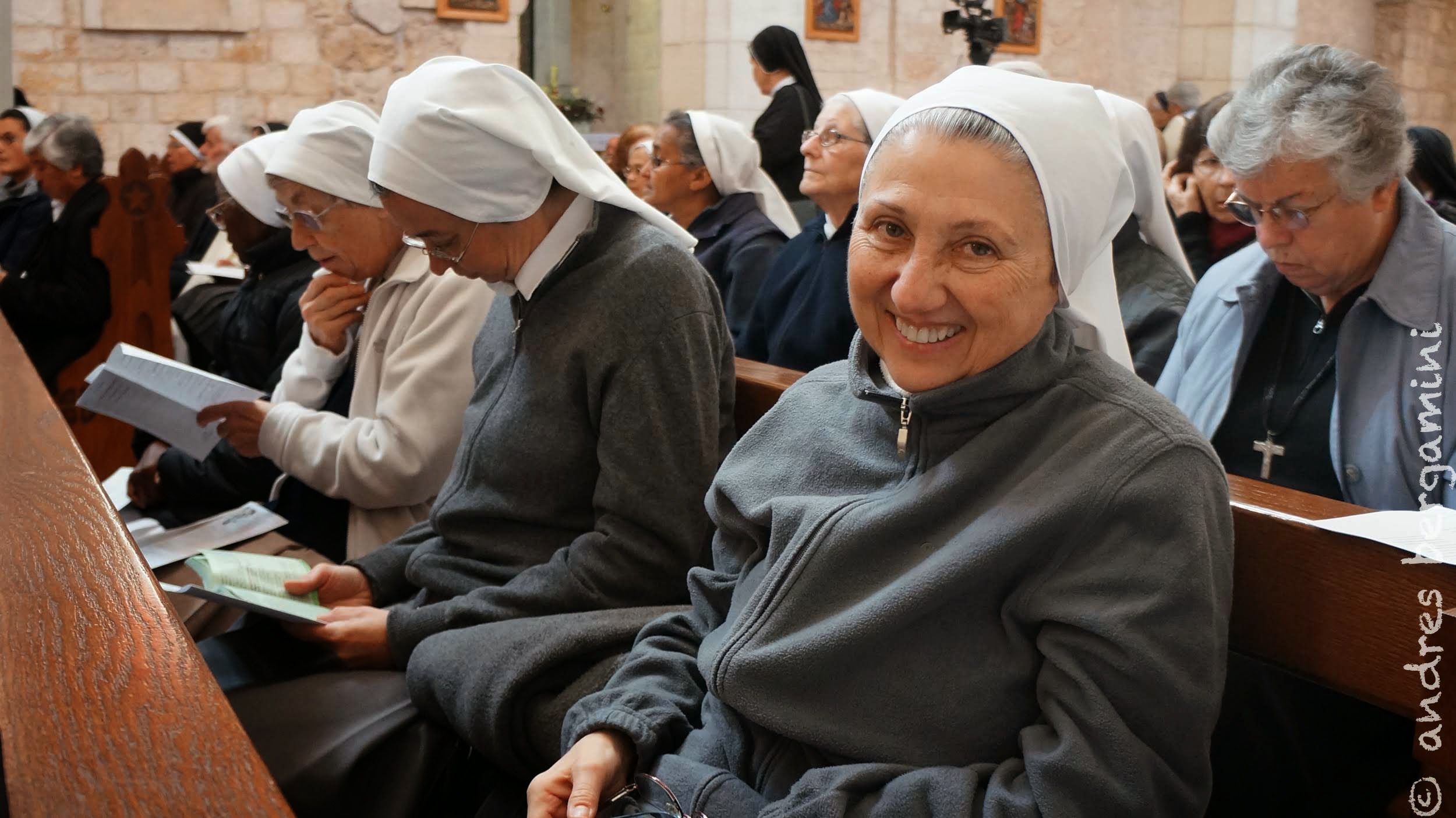
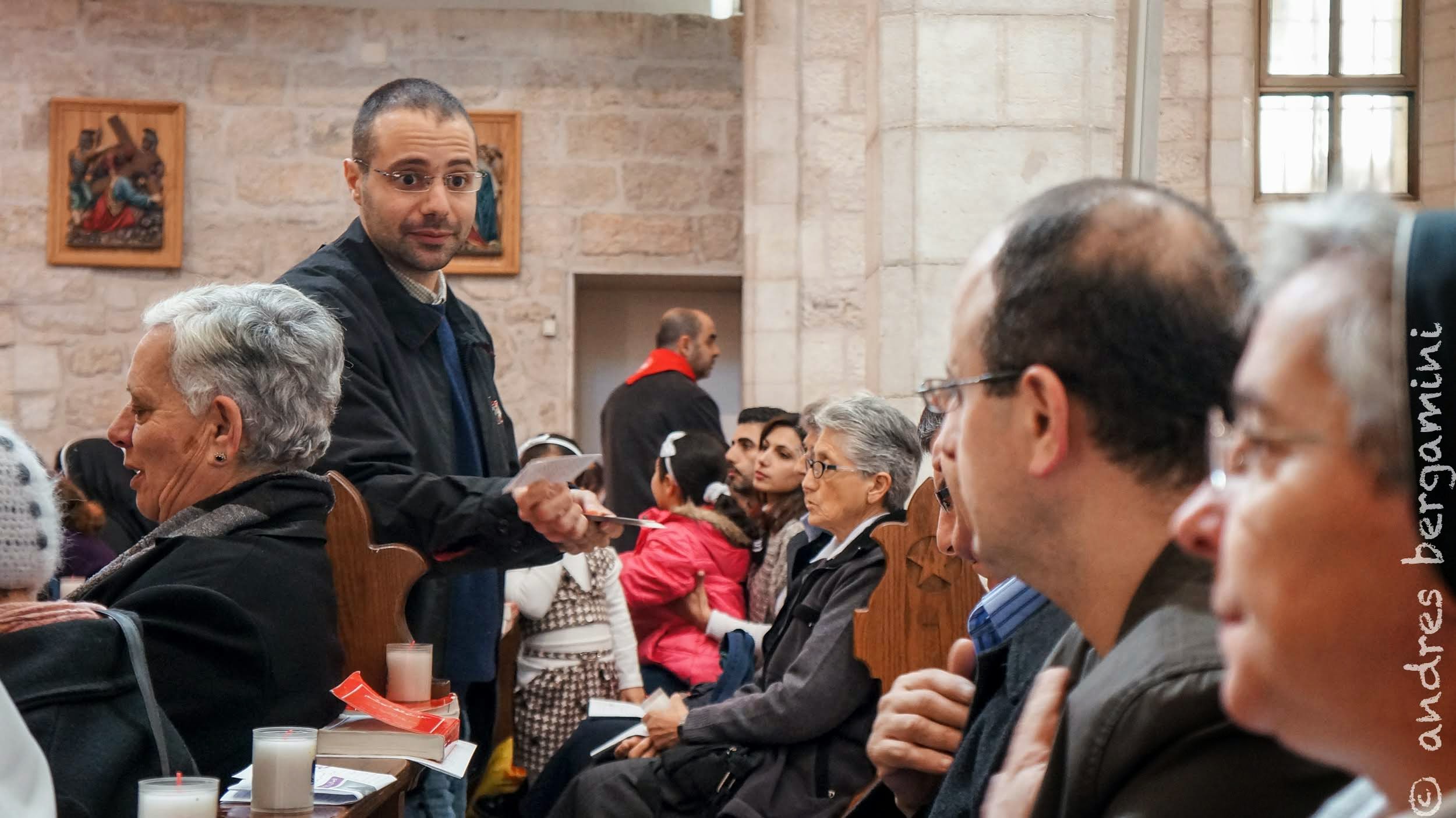
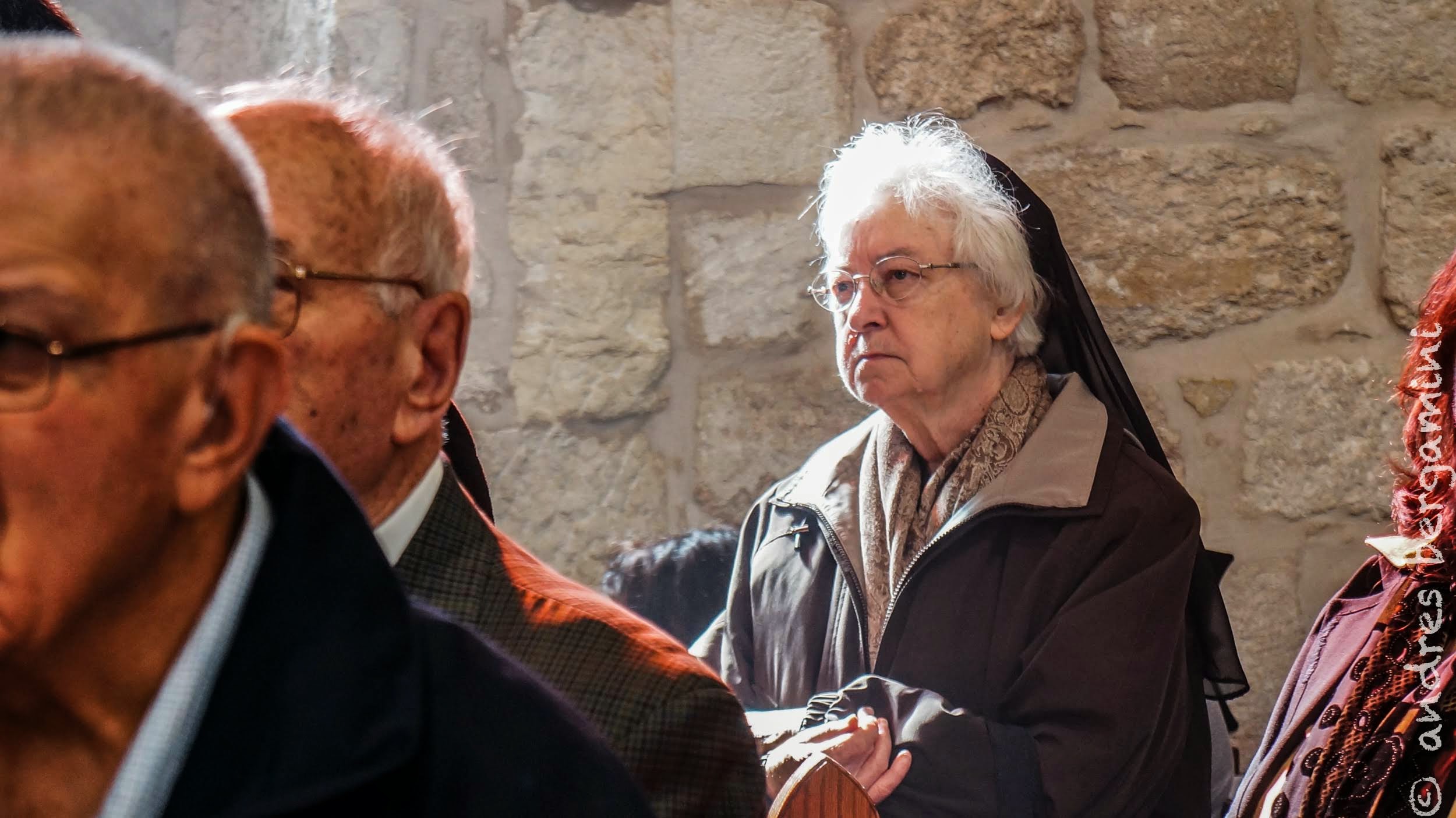
As a single family, consisting of the elders who embody wisdom, and the youth who carry the flame of life and hope, men and women religious and consecrated persons of the area of Jerusalem and Judea were present, to celebrate the opening of the Year of Consecrated Life at the invitation of the Catholic Ordinaries of the Holy Land.

In his welcome address at the beginning of the Mass, the Custos greeted the congregation, including the parishioners of Bethlehem and the neighboring towns, reminding them of the three events celebrated on this day, the First Day of the Advent, the inauguration, in union with the Church of Rome, of the Year of Consecrated Life, and finally the day the parish and the Franciscan Convent of Bethlehem celebrate their patron saint, Saint Catherine of Alexandria, martyr of the third century.

But what is a religious? Who is a religious or a consecrated person? Men and women baptized, who have decided to live their baptismal vows, by which they carry Christ in the following closely and radically a life of poverty, chastity and obedience to the promised Kingdom. They do so in our modern world, seeking the Lord and finding happiness in ministry and not in possessions. The witness of the consecrated religious is more urgent than ever. They are the ones that constantly tell the world that “God alone suffices”, as St. Teresa of Avila constantly reminded her Carmelite sisters.
This message was also highlighted by Father Custos, who reminded men and women religious, at the beginning of the Mass, of their duty to “remember every day their reason for being.”

In the Gospel of the First Sunday of Advent, Christ fires a warning all: “Take heed, watch” (Mark 13: 33-37). Men and women religious, seeking more freedom and availability through the vows, take seriously these words of Christ, and guarantee in the Church the living presence of prayer, fasting, and listening to and obeying the Word God, while waiting for the Kingdom of God which will appear at the second coming of Christ. Their role is, above all, to remind their brothers and sisters in humanity, and especially their brothers and sisters who are marked by the seal of Christ, that He is the ultimate goal of every single person and, indeed, all creation (Rom 8: 19).

The celebration was a moment of joy for all. A family joy; as the small church in the Holy Land is a family. All, lay and consecrated, are happy to return from time to time to exchange news and experiences.

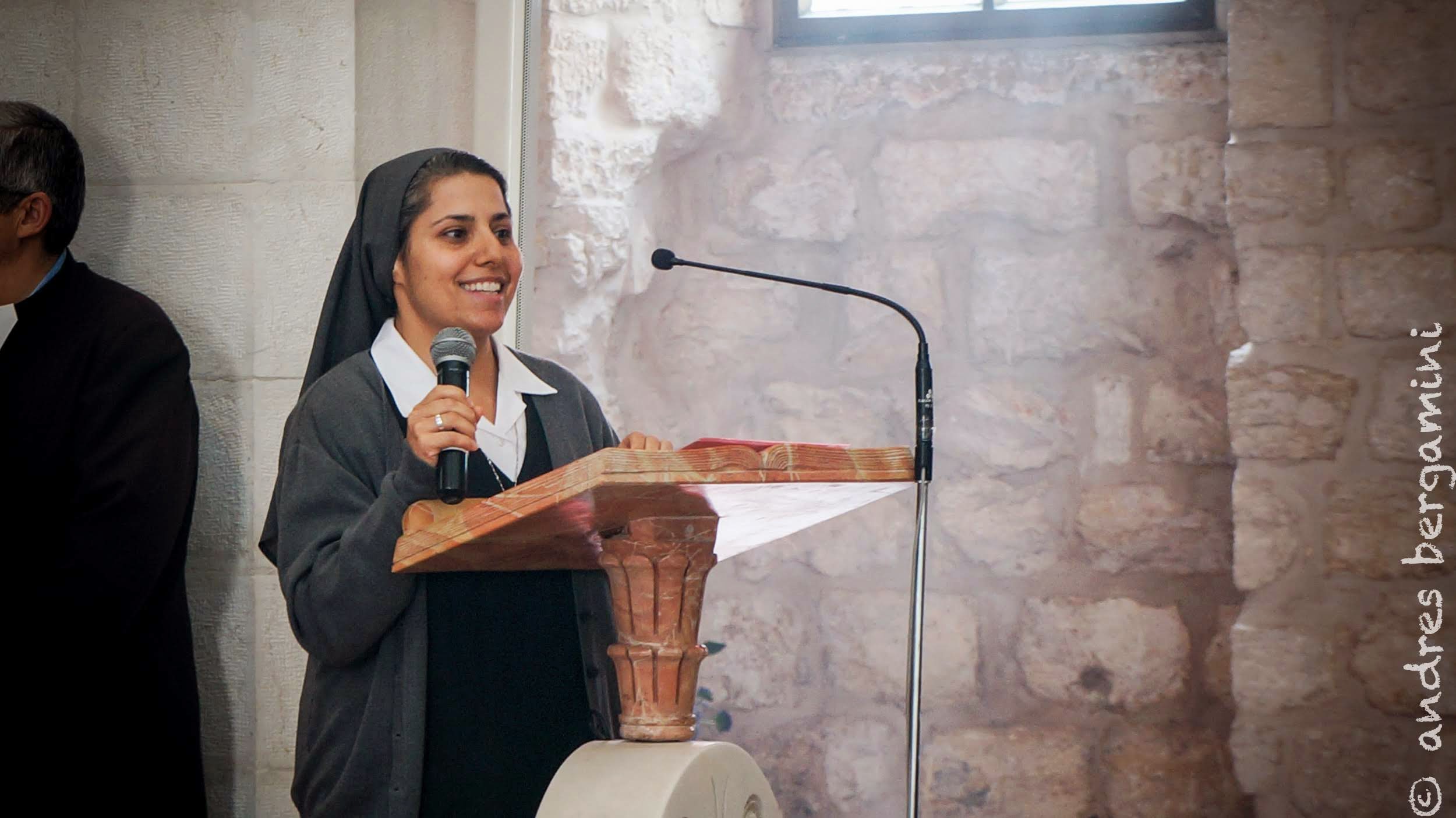
The choir of the Bethlehem parish led the chants of the Mass, at which a large number of priests concelebrated. The homily was given by the parish priest, Father Nirwan, OFM. Two young Palestinian consecrated religious – Br. Daoud Kassabri of the Congregation of Christian Brothers, and Sr. Mouna Totah of the Congregation of Sisters of St. Joseph of the Apparition – gave their testimonies, recounting the story of their vocations. Both spoke of the “joy of consecrated persons” whom they encountered in their young lives, which, in turn, encouraged them to follow this path and this model of Christian life.

At the end of the celebration, Bishop Shomali, on behalf of the Assembly of Catholic Ordinaries of the Holy Land, thanked all the faithful, stressing that the Mother Church is not sterile, and still yields vocations. According to the bishop, these vocations are perhaps not very numerous, but the percentage is not small in comparison with the small number of Christians living in the Holy Land today.

An entire year will be dedicated to Consecrated Life in the Universal Church. An opportunity for consecrated persons to deepen their vocation and regain their “First Love”, according to the Scriptural expression dear to Pope Francis. It is likewise a call to the lay faithful – consecrated to Christ by their baptism – to accompany the consecrated religious in prayer, remembering the free service of Charity that they offer the world for decades, and sometimes from centuries, through their institutions, convents and monasteries.

Firas Abedrabbo

Source: http://en.lpj.org/2014/12/02/the-consecrated-should-remember-every-day-their-reason-for-being/

30112014-DSC03892.jpg30112014-DSC03898.jpg30112014-DSC03907.jpg
30112014-DSC03911.jpg30112014-DSC03913.jpg30112014-DSC03915.jpg
30112014-DSC03928.jpg30112014-DSC03944.jpg30112014-DSC03950.jpg
30112014-DSC03966.jpg30112014-DSC03969.jpg30112014-DSC03972.jpg30112014-DSC03982.jpg30112014-DSC03987.jpg30112014-DSC03988.jpg
30112014-DSC04009.jpg30112014-DSC04018.jpg30112014-DSC04023.jpg
30112014-DSC04029.jpg30112014-DSC04033.jpg30112014-DSC04038.jpg
30112014-DSC04042.jpg30112014-DSC04047.jpg30112014-DSC04048.jpg
30112014-DSC04055.jpg30112014-DSC04067.jpg30112014-DSC04070.jpg
30112014-DSC04073.jpg30112014-DSC04082.jpg30112014-DSC04084.jpg30112014-DSC04087.jpg30112014-DSC04090.jpg

Monday, December 1, 2014

The Israeli High Court Holds Another Hearing On the Cremisan Valley Case


Society of St. Ives, Dec. 1, 2014 - The Israeli High Court held an additional hearing yesterday 30-11-2014 about the case pertaining to the building of the separation wall in the Cremisan Valley. The aim of the hearing was to ascertain the opinions of the different  sides to the case on the alternatives suggested by Israel’s Ministry of Defense regarding the proposed alternatives they put forward for building the separation in Cremisan.

In its capacity as the representative of the Silesian Nuns, St. Yves, expressed its absolute refusal of the latest Israeli alternatives, which are contrary to the Court’s decision delivered on 7-8-2014, by which it instructed the Israeli Ministry of Defense to consider new alternatives that leave both the Silesian convent and monastery on the Palestinian side of the wall. Moreover, St. Yves stressed that such alternatives do not respect the principle of the unity of the Silesian orders, their lands, community and facilities.

The Peace and Security Council, speaking as amicus curiae stated that the alternatives proposed by Israeli Ministry of Defense are a failure from a security perspective, and cannot be invoked to achieve security.

Beit Jala’s Mayor, Dr. Salman, highlighted the serious harm of the proposed alternatives on the community and their historical attachment to their lands, whereas Mrs. Vera Baboun, the Mayor of Bethlehem added that such alternatives will hinder the livelihood of the community in Cremisan - the majority of whom are Christians- and will, inevitably lead, to their immigration from the country. 


Written by Administrator, Society of St Ives

The Society of St. Yves is a Catholic human rights organization working under the patronage of the Latin Patriarchate in Jerusalem. It was founded in 1991 by the former Latin Patriarch of Jerusalem and the Holy Land, Michel Sabbah, to help "the poor and the oppressed" according to the social doctrine of the Catholic Church. St. Yves provides gratis legal assistance, counsel and advocacy to members of the community. Through National and International Lobby and Advocacy we are able to bring the situation of the poor and marginalized to the attention of communities around the world.
Today St. Yves manages some 700 cases per year and assists about 2,000 people.